ASI CEO to share insights from large-scale deployments at RoboBusiness

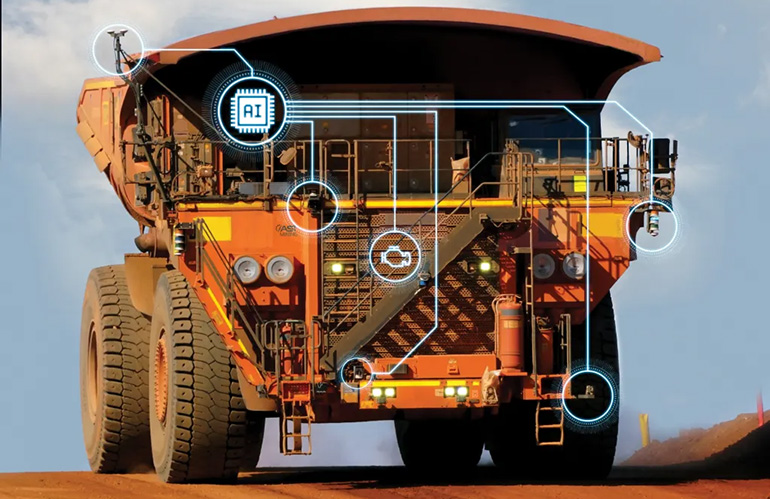
ASI has worked with construction vehicle OEMs and partnered with SoftBank. Source: Autonomous Solutions Inc.
Last month, Autonomous Solutions Inc., or ASI, opened its third location in the U.S. with a facility in the Dallas-Fort Worth metropolitan area. The Mendon, Utah-based company already has a 100-acre proving ground in Northern Utah.
ASI was founded in 2000 by engineers who commercialized technologies developed at Utah State University. The company has developed the Mobius autonomous fleet management system, which is now used in agriculture, construction, landscaping, and logistics.
“We just celebrated 25 years, and that has been has been quite a journey, seeing all of the cycles and the companies coming and going,” said Mel Torrie, co-founder and CEO of ASI. “Our investor SoftBank has estimated that 90% to 95% of all robot companies have gone out of business. And so the mortality rate is high. So we feel blessed and fortunate.”
“We have followed a bootstrapping model,” he told The Robot Report. “And so we haven’t had timelines of private equity venture capital to move a hardware software business to an exit in three to five years, and that’s been the blessing. We’ve always avoided the exit-driven mindset and money, so that’s been good.”
Torrie, who has worked on multiple NASA payloads among many other projects, will present a session about “Applying Lessons From the World’s Largest Mining Deployment to Other Markets” at RoboBusiness 2026. The leading event for commercial robotics developers and suppliers will be on Oct. 15 and 16 in Santa Clara, Calif.
RoboBusiness will include tracks on field robotics, design and development, business, enabling technologies, physical AI, and humanoids. Registration is now open.

ASI demonstrates large-scale autonomy
In the past year, Autonomous Solutions Inc. has deployed autonomous systems in massive vehicles across challenging distances.
“We partnered with the largest mining drill manufacturer named Epiroc to go after mining autonomy,” recalled Torrie. “We built that over years with deployments across different countries in Africa plus Ukraine, the U.S., and Australia.”
After winning a contract for what it claimed was “the largest autonomy site in the world” in Australia, ASI sold the rights to Epiroc.
“We gave our people the choice whether they went with Epiroc or stayed with ASI. That was an exciting milestone,” Torrie said. “We were running 24/7 at the site, which includes 100 mining trucks and 250 to 300 vehicles in the whole ecosystem under our Mobius platform, which coordinates and orchestrates all of those vehicles and keeps them safe among humans.”
“And that was running from 800 miles away,” he added. “We needed to hit 5% better-than-human performance and 98% uptime,” he explained. “To achieve that for this $8 billion-a-year mine was incredible and really showed us that the last 10% does take 90% of the time and money. We celebrate that we retrained the drivers to operate the software and actually produced at scale to the point where a public company wanted to buy that and take it over.”
SoftBank helps launch construction unit
In May, Autonomous Systems Inc. launched the ASI Construction unit with SoftBank Group Corp., building on its experience in areas away from population and addressing labor shortfalls in offroad markets.
“SoftBank loves the IP, the platform that we had built that allowed us to scale in mining,” said Torrie. “We’ve been diversified across four to six industries at a time in this bootstrapping model. And we’re excited both from that exit and SoftBank partnering that we’ve got the money to continue to scale. And so I think we just hired 125 people last year.”
Companies such as Caterpillar, Komatsu, and ASI have all developed autonomous vehicles for heavy industrial applications, but adoption is a bigger challenge than competition, he acknowledged.
“Competition isn’t scary. How do you convince people to bet their jobs that a network won’t go down in the oldest industries in the world? So adoption’s the brutal part,” said Torrie. “The key to our success has been learning from failures. We’ve tried about every industrial vehicle application — we’ve done indoor cleaning, material handling, security, and parking robots.”
“And because we bootstrapped, it wasn’t the end,” he noted. “We just learned and iterated based on the things that we continue to build our tech stack. And we’ve worked with venture capital funds and with quarterly earnings, risk-averse public companies. And we’ve learned from that.”
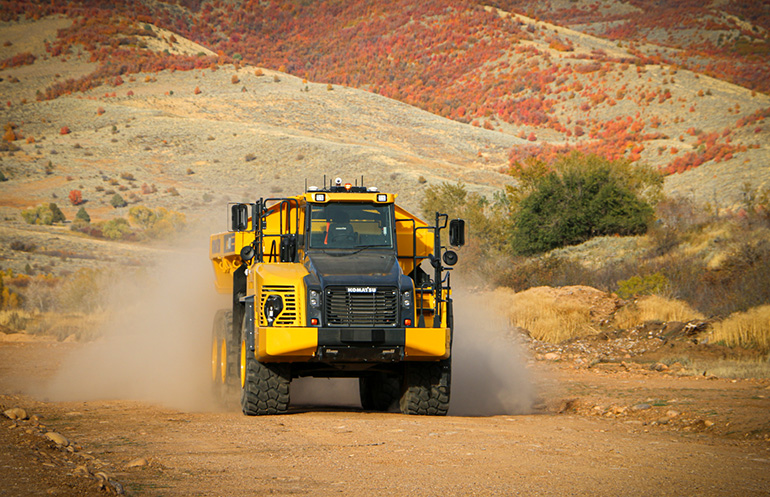
ASI has worked with construction vehicle OEMs and partnered with SoftBank. Source: Autonomous Solutions Inc.
Torrie talks about iterative strategy
On the way to growing in new markets, The ability to realize when a direction wasn’t working and then pivot was critical to ASI’s success, Torrie said. For instance, the company moved from automotive to off-road markets.
“We walked away from millions of dollars and changed to, we’re on Game Plan 3.0 right now, but we’ve moved on from 1.0, which was partnering with the OEMs,” he said. “And I used the Clayton Christensen ‘innovator’s dilemma’ slide to raise $300 million with those OEMs to help them with that dilemma. But we could never get to market. We would roll out with the dealers, and then the liability attorneys would kill it, or a new CEO because the quarterly earnings weren’t right and stock price was down. And so they just got the strategy and moved to another executive. So one of the public companies we worked with over eight years had 22 different managers at the two levels we deal with.”
ASI’s “2.0” strategy was creating market-specific products, and Game Plan 3.0 involves working with large players in sectors such as landscaping and mining, said Torrie. He said Version 4.0 will roll out with dealer distribution networks.
“We never had someone saying, ‘You have to exit and give me this kind of return in this timeframe with a hardware and a software business,’” he said. “Now we have something refined over 25 years that we’re able to get through that last 10% in the mining industry and the worst environments in the world with the biggest vehicles in the world from hundreds of miles away.”
“We have product trials going in golf course mowers and yard truck automation for one of the largest retailers in the world, and we’re working with the largest farms in the world,” Torrie concluded. “So it’s an exciting time where we finally have something that’s hardened and the labor demand is so severe.”