Wandercraft earns second FDA clearance for Atalante X exoskeleton

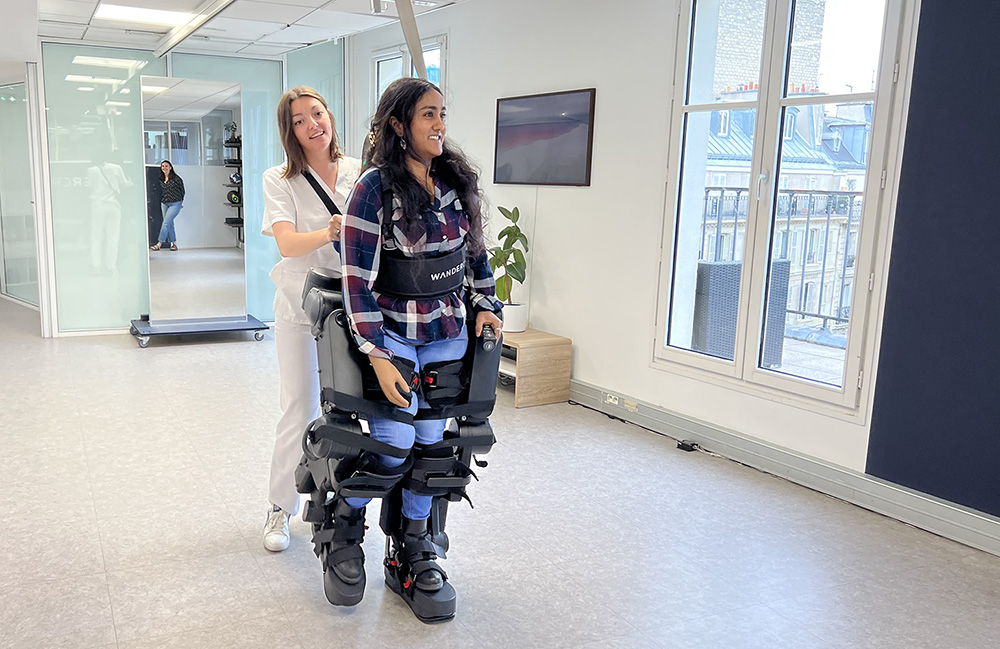
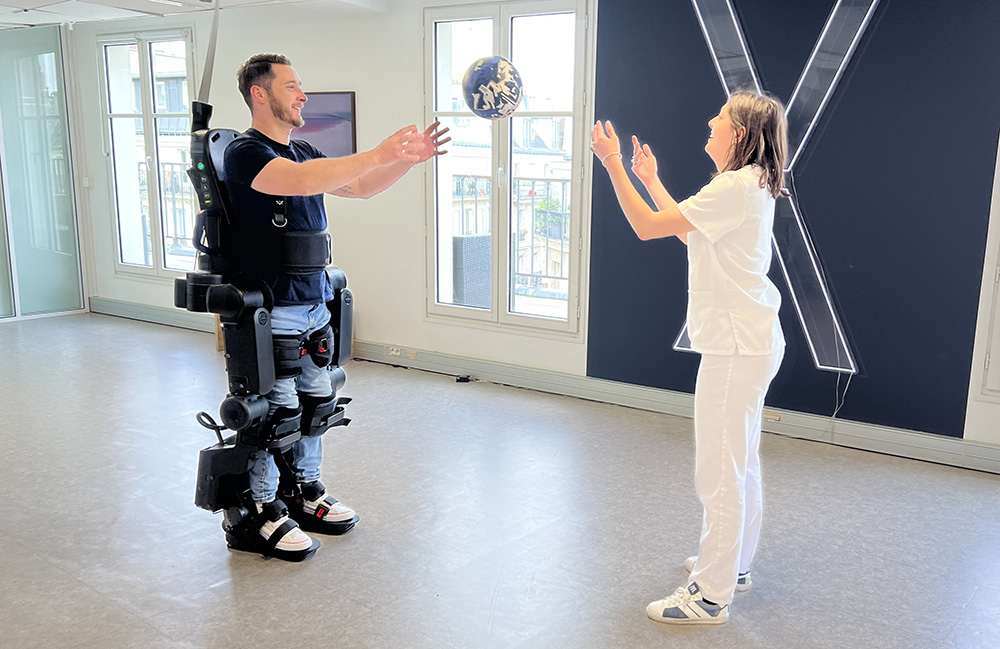
Atalante X uses its self-balancing feature to enable multitasking by carrying out lower limb, posture, balance, and upper limb reinforcement exercises in a safe upright position. | Source: Wandercraft
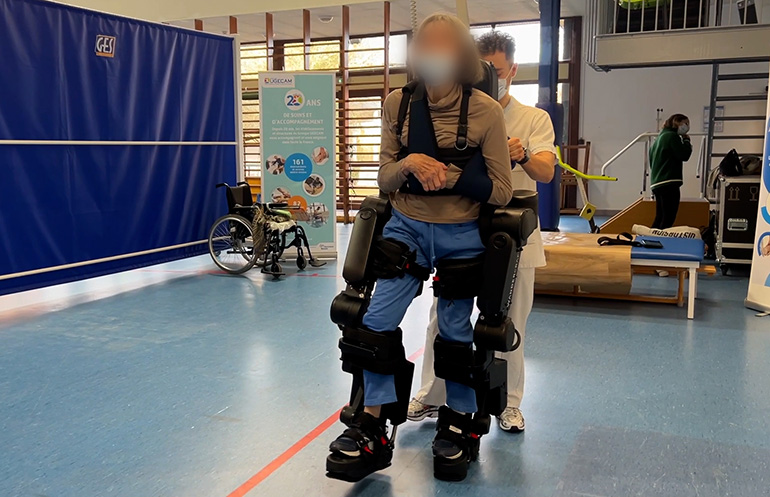
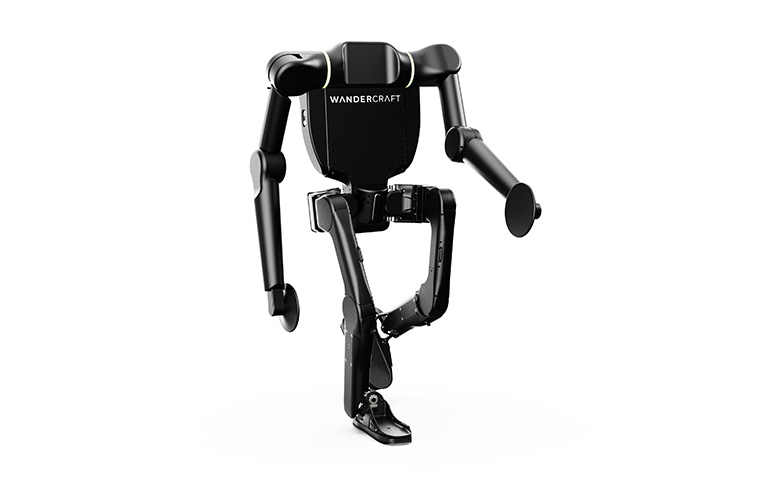
Wandercraft, a developer of self-balancing exoskeletons and humanoids, said this week the U.S. Food and Drug Administration (FDA) cleared expanded indications and upgraded features for its Atalante X flagship rehabilitation device.
This clearance comes a few months after receiving expanded CE Mark certification for enhanced clinical features and a wider range of neurologic conditions. These include tetraplegia and tetraparesis.
“This extension of indication for Atalante X marks a significant advance in neurorehabilitation and patient access to technology that enables them to walk again,” said Matthieu Masselin, CEO of Wandercraft. “It enables therapists to personalize training for complex patients, now going as far as to the joint level, and help even more people with severely limited upper-body strength to experience upright movement safely and confidently – something which many thought was impossible.”
The extension of indication authorizes Wandercraft to offer Atalante X to individuals with spinal cord injury (SCI) from levels C4 to L5 and in those with multiple sclerosis (MS). This, the company said, broadens access to upright, hands-free gait therapy. This advancement in rehabilitation builds upon earlier FDA indications for SCI at levels T5-L5 and for individuals with hemiplegia due to cerebrovascular accidents (CVA).

The French robotics company said its technology is powered by AI that has been refined through billions of simulations and tens of millions of real-world steps.
In February, Wandercraft started a clinical trial of its personal exoskeleton. The self-balancing exoskeleton offers upright motion and walking independence for individuals with severe mobility impairments. It provides the benefits of standing, walking, bending, reaching, and restoring the feeling of natural walking motion to everyday life. In June, it raised $75 million in Series D funding.
Multicenter study supported FDA’s decision
Atalante X is in over 100 rehabilitation and research centers worldwide. It has enabled thousands of patients to take over 1 million steps per month. Wandercraft recently deployed its technology at the Moody Neurorehabilitation Institute and Rancho Research Institute.
The company conducted a multicenter study of 547 training sessions among patients with high-level spinal cord injury, which supported the FDA’s decision. The study confirms the safe use of Atalante X among this patient population in rehabilitation and suggests potential functional benefits in tetraplegic patients.
“We now have data confirming what we had observed in practice, that Atalante X can be used safety and effectively by people with high-level spinal cord injuries and multiple sclerosis,” said Maria Ida Iacono, Global Chief Regulatory, Quality and Clinical Affairs Officer of Wandercraft. “Participants showed encouraging functional improvements, with a solid safety profile and high levels of user satisfaction.”
Wandercraft upgrades Atalante X
Atalante X’s self-balancing design allows clinicians to initiate upright training even with severely impaired patients. The upgraded system now also offers joint-specific assistance control – independent tuning at each hip and knee motor – and step-length adjustments in 5% increments. Wandercraft said this enables fine, progressive adaptation to each patient’s motor profile. These capabilities give therapists greater precision to align every session with clinical objectives, comfort, and safety.
The update to the Atalante X system also includes enhanced graphical data in patient reports, updated training protocols for clinician onboarding, and refined hardware components such as more durable foam support.
Potential to help millions worldwide
Spinal cord injury (SCI) affects an estimated 296,000 people in the United States and more than 20.6 million worldwide. Roughly 45% result in some degree of tetraplegia. Each year, an additional 17,900 new SCI cases occur in the U.S.
Multiple sclerosis (MS) affects nearly 1 million people in the U.S. and 2.8–2.9 million worldwide, often leading to progressive mobility impairment. For both populations, maintaining upright posture and ambulation – even briefly – can improve cardiovascular health, bone density, and psychological well-being.
Cerebrovascular accident (CVA / stroke) is another leading cause of long-term disability. It affects nearly 795,000 Americans each year and more than 12 million people globally. Approximately half of stroke survivors experience hemiplegia or significant gait impairment, often requiring long-term therapy to restore independence.