
Terranova gets seed funding to deploy terraforming robots

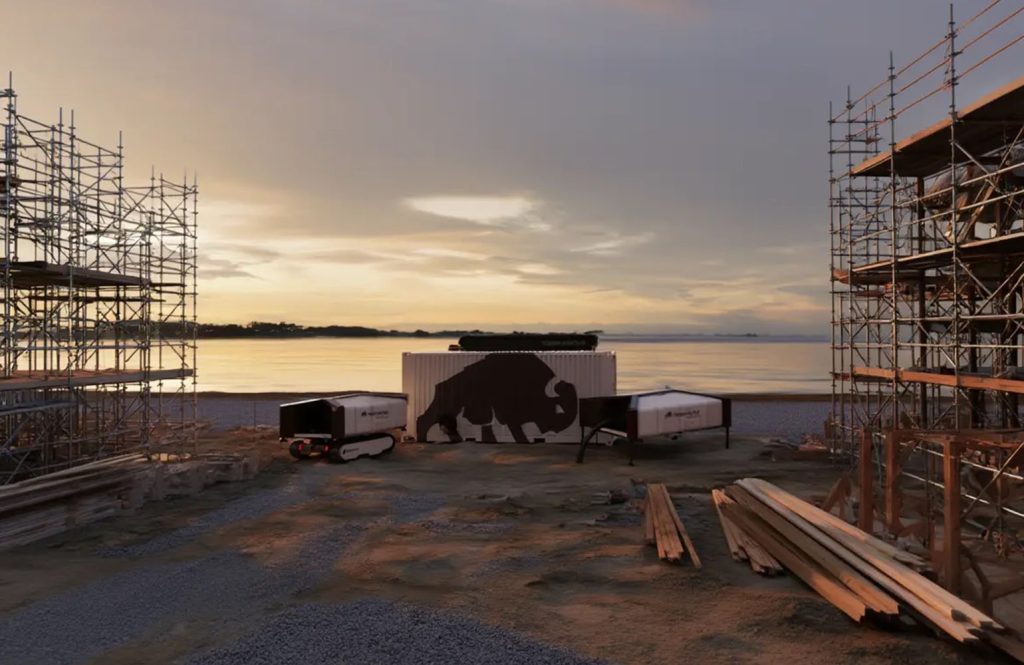
By raising and reshaping land before construction, Terranova said it can enable new housing, commercial, and industrial projects in flood-prone regions. | Source: Terranova
Flooding is a global challenge, but one company is developing robots to rise above the problem. Terranova Inc., which is using autonomous subsurface injection to lift and stabilize flood-prone terrain, this week emerged from stealth with $7 million in seed funding.
Flooding and land subsidence are driven by factors including sea level rise, weather extremes, groundwater withdrawal, soil consolidation, and the loss of natural watersheds. Flooding is estimated to cost the U.S. economy over $180 billion each year, with over $68 billion required annually for infrastructure upgrades, according to Terranova. The San Francisco-based company claimed that it is using technology to reshape the terrain itself.
“Having lived in San Rafael for 25 years, flooding has begun to seem like an existential problem,” stated Trip Allen, chairman of Terranova. “Much of the inner city is 6 ft. below sea level and floods regularly. I am proud to be bringing the first solution my city can afford to market.”
“We’ve solved the challenges related to flooding — that’s the headline,” added Laurence Allen, CEO of Terranova. “We’re combining heavy robotics and geotechnical innovation to literally reshape the world. Terranova’s mission is nothing less than to terraform the earth and usher in a new era of resilience and societal abundance.”
Terranova reshapes terrain with robotic injections
Terranova reshapes terrain using robots roughly the size of cars that inject a wood slurry deep underground. This process lifts properties out of their flood zones with no surface disturbance, said the company. It asserted that this elevation provides proactive protection for all types of infrastructure, real estate, and coastal wetlands.
Terranova’s system consists of three injection robots and one “mothership.” It can lift up to one acre by a foot (0.4 hectares by 0.3 m) per day. The company said its approach enables “a step change in productivity” in comparison with conventional fill or civil work.
Terranova’s technology stack includes:
A site suitability predictor based on soil composition and flood risk
AI and machine learning reasoning models to design injection campaigns
Closed-loop control of semi-autonomous injection rovers to achieve the desired surface topology
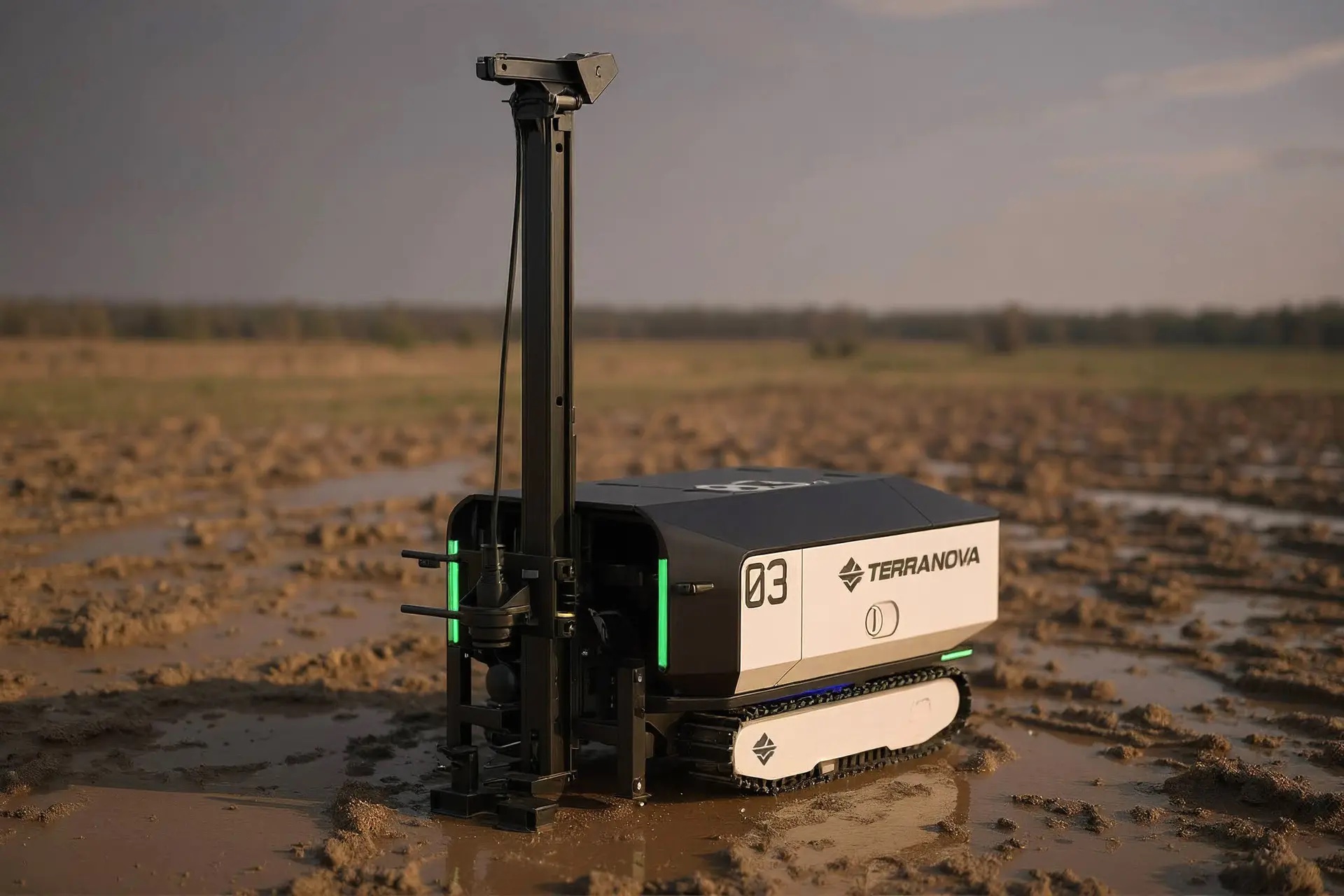
The Atlas platform can be equipped with Prometheus, its pumping pod, and Vulcan, its drilling pod. | Source: Terranova
Funding to grow engineering, field deployment teams
Terranova said its seed round closed three times oversubscribed. The company plans to use the funding to begin its first projects, reach full-scale production of its robot systems, and grow its core engineering and field deployment teams.
Outlander and Congruent Ventures led the round with participation from GoAhead Ventures, Gothams, and Ponderosa (a Galvanize Climate fund).
“Flooding and land subsidence are urgent global challenges,” noted Kevin Kopczynski, a partner at Congruent Ventures. “By turning waste biomass into a durable fill, Terranova creates both a climate adaptation and a climate mitigation solution at a much lower cost than traditional approaches — giving society a tool to push back.”
Terranova claimed that its process has demonstrated environmental safety and cost advantages over traditional flood infrastructure. At scale, the company said it is targeting costs that are up to an order of magnitude less than levees or seawalls.