A look at iRobot’s 35-year robotics journey

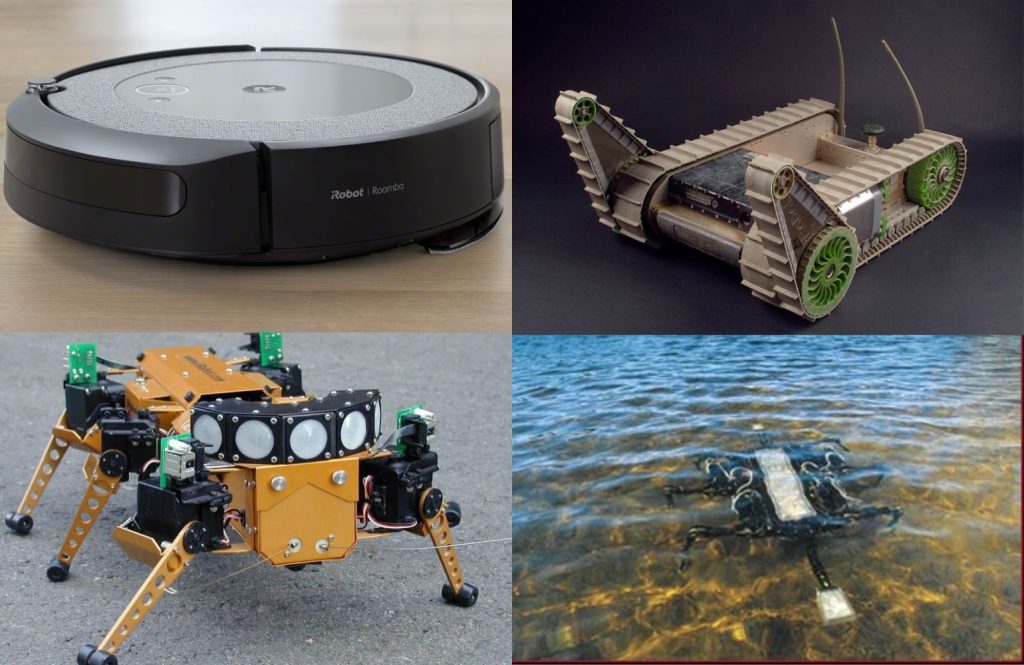
In the top row, a Roomba and a Packbot. In the bottom row, Genghis and Ariel. | Source: iRobot, the National Museum of American History, MIT
iRobot officially started the Chapter 11 bankruptcy process this week. It expects the proceedings to be finished by February 2026. While we still don’t know exactly what the future holds for iRobot, the company said its Roomba robot vacuums will operate normally during the restructuring.
Since its founding in 1990, iRobot has sold more than 50 million robots worldwide. iRobot has been a pillar of the robotics community. It spurred innovation and became the first company to put robots in people’s homes at scale. Even today, it’s likely the only robot the average person has interacted with is a robot vacuum cleaner.
While we wait to learn more about the company’s future, let’s take a look back at the highs, lows, and everything in between.
1990: iRobot is founded

From left to right: Helen Greiner, Rodney Brooks, and Colin Angle, the co-founders of iRobot. | Source: iRobot
In 1990, three engineers in MIT’s Artificial Intelligence Lab, Rodney Brooks, Colin Angle, and Helen Greiner, launched IS Robotics, Inc., which would eventually become iRobot. The company’s goal was to develop practical robots for use in space, military, and industrial applications. At its start, the company relied mostly on government contracts to keep going.
iRobot’s first offering was the Genghis robot, designed for space exploration. This six-legged insect-like robot was launched in 1991. In 1996, iRobot developed Ariel, a robot to detect and eliminate mines in surf zones.
In 1998, iRobot won a DARPA contract and started building a tactical mobile robot. This eventually led to the development of PackBot, a military robot. In 2001, PackBot was used during searches at the World Trade Center after the September 11 terrorist attacks.
2002: iRobot launches Roomba
Over a decade after it was established, iRobot released its flagship robot: Roomba. Roomba is an automated vacuum cleaning robot powered by a rechargeable battery. In just over two years, iRobot sold one million Roombas, a milestone most robotics companies haven’t reached today.
While the Roomba became iRobot’s commercial focus, it was still developing the PackBot and other robots for its government contracts. In 2002, PackBot was deployed with U.S. troops for the first time.
iRobot worked with the National Geographic Society to develop a robot that searches the Great Pyramid in Egypt. In 2004, iRobot won a contract to develop a small Unmanned Ground Vehicle (SUGV).
2005: iRobot begins trading on the NASDAQ
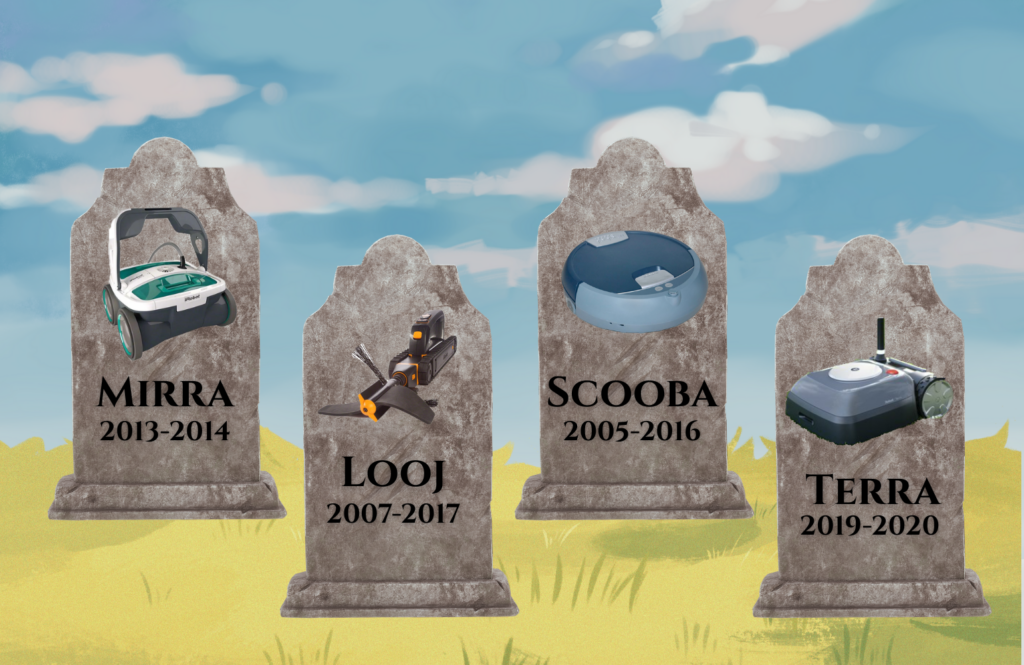
In 2005, iRobot stock began trading on the NASDAQ Stock Exchange under ticker symbol IRBT. The same year, iRobot launched its Scooba floor washing robot. This release marks the start of an era of innovation for iRobot. With Roomba sales climbing, the company began searching for its next big home robot.
In 2006, it launched the Dirt Dog shop sweeping robot. The next year, it launched the Create programmable mobile robot, the Verro pool cleaning robot, and the Looj gutter cleaning robot. None of these robots had the staying power of the Roomba, however.
iRobot continued to release new products over the next few years. In 2008, it launched the Roomba pet series and professional series vacuum cleaning robots. It also expanded into maritime robots and won a contract to develop the LANdroid communication robot.
2010: 20 years of iRobot
iRobot celebrated the company’s 20th anniversary in 2010. The company co-sponsored National Robotics Week. At this point, iRobot’s position as a leader in the industry and a household name was secured.
That same year, iRobot helped to monitor the Gulf of Mexico oil spill with its iRobot Seaglider. The robot worked to detect underwater pools of oil. In 2011, PackBot was used to gather data on the dangerous conditions at the Fukushima Daiichi nuclear disaster site.
The company also spent 2011 making improvements to its product portfolio. It developed the 110 FirstLook, a small, light, throwable UGV. Additionally, the company launched the Scooba 230 floor washing robot and the Roomba 700 series vacuuming robots.
2012: iRobot acquires Evolution Robotics
In 2012, iRobot started to look for technologies outside of the ones it developed in-house. It acquired Evolution Robotics, a manufacturer of the automated floor mopper Mint, for $74 million. A year later, iRobot rebranded Mint as iRobot Braava. Like Mint, Braava used a disposable cleaning cloth for damp and dry cleaning.
The company also made progress in its military work. In 2012, it announced it had delivered more than 5,000 defense and security robots worldwide.
2016: iRobot goes global and sells military robotics unit
2016 marked many changes for iRobot. It started putting its attention toward bringing consumer robots all around the world. In February, the company sold its military robotics business to Arlington Capital Partners to focus on its robotics vacuums. The same year, iRobot expanded its global footprint to China by opening its first Shanghai office.
In 2017, it acquired Sales on Demand Corporation (SODC), launching new offices in Japan, and Robopolis, its largest European distributor, opened new offices across Europe. At this point, iRobot had sold over 20 million home robots worldwide.
In 2019, the company acquired Root, an education robotics company.
The company’s investments seemed to pay off. Just three years later, by 2020, the company had sold more than 30 million robots worldwide. This means iRobot sold more than 10 million robots from 2017 to 2020.
During this time, iRobot also planned to release its Terra robot lawn mower. This product was officially unveiled in 2019 and then delayed in 2020 due to COVID-19. The company never returned to Terra after this delay.
2021: iRobot looks beyond robotics
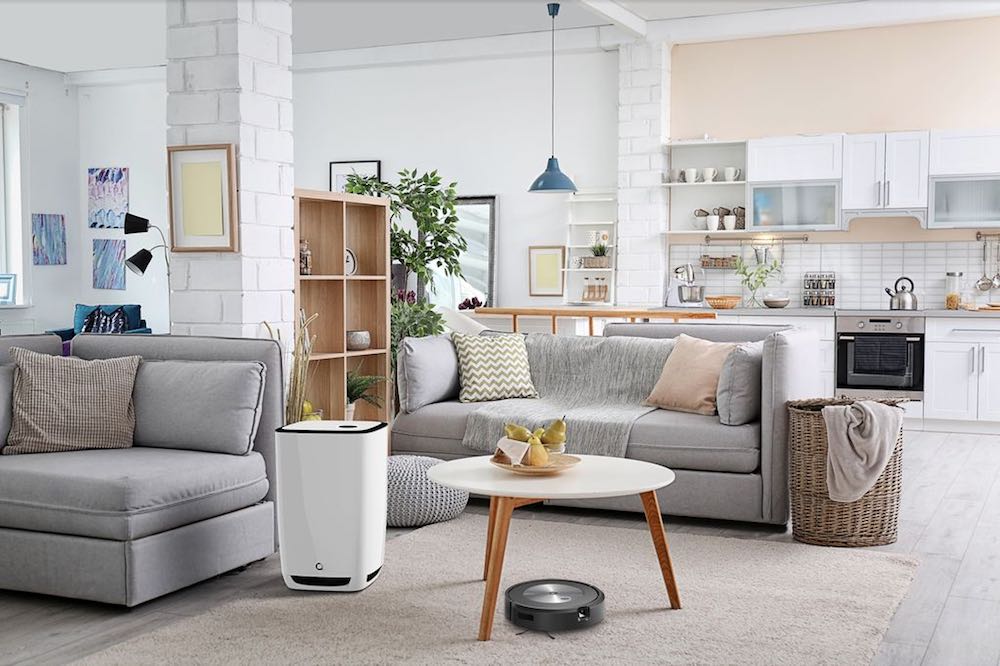
iRobot acquired Aeris, a Swiss supplier of air purifiers. This photo shows products from both companies. | Credit: iRobot
While iRobot was expanding at a rapid pace, it also started facing competition from other robot vacuum manufacturers. At this point, many developers, particularly those in China, could offer vacuums with comparable features to the Roomba at a much lower price.
So, iRobot began looking at expanding its offerings beyond robotics. First, the company released its first handheld vacuum. This product was designed to clean spaces the Roomba couldn’t get to. Additionally, it acquired Aeris Cleantec, an air purification company, for $72 million. No doubt, the company hoped to capitalize on the public’s increased interest in air purifiers that stemmed from the 2020 COVID-19 pandemic. iRobot discontinued the Aeris line in 2024.
2022: Amazon makes bid to acquire iRobot
An edited image showing an iRobot Roomba with Amazon branding. | Source: iRobot, Amazon
In 2022, iRobot was in a difficult spot. It wasn’t growing like it was a decade ago; it was being squeezed by cheaper competition, and its revenue was dropping. In comes Amazon, with an offer to acquire iRobot for $1.7 billion.
Amazon had already bought several robotics companies, including Kiva Robotics, Canvas Technology, and Zoox. However, these companies didn’t produce consumer robots like iRobot.
While the Amazon deal acted as a lifeline for the company, iRobot was still struggling. In August 2022, the company laid off 10% of its staff, or about 140 employees. The layoffs were part of a restructuring plan that the company hoped would save it up to $10 million in 2022 and between $30-$40 million in 2023.
In September, the Federal Trade Commission (FTC) officially opened an antitrust investigation into Amazon’s plans to acquire iRobot. The FTC had concerns about whether the data provided by iRobot’s Roomba robot vacuum gives Amazon an unfair advantage in the retail industry.
In 2023, the European Commission (EC) also opened an investigation into the Amazon, iRobot acquisition. The EC told Amazon late in the year that its preliminary view is that the acquisition may restrict competition in the market for robot vacuum cleaners. The EC was concerned that Amazon could throttle iRobot’s competition in its online marketplace.
2024: Amazon acquisition called off
At the start of 2024, iRobot and Amazon announced they would terminate their acquisition plans. The companies mutually agreed on this decision and blamed “undue and disproportionate” regulatory scrutiny for the demise of the deal.
At the same time, Angle stepped down as chairman and CEO, and iRobot announced it would lay off 350 employees, representing 31% of its workforce at the time. Later that year, Gary Cohen, who has 25-plus years of executive leadership and turnaround experience, was named CEO.
iRobot continued to struggle throughout the year. In November, it laid off another 105 employees as part of its restructuring plans. Since the start of 2024, the company had reduced its global workforce by nearly 50%.
2025: iRobot files Chapter 11 bankruptcy
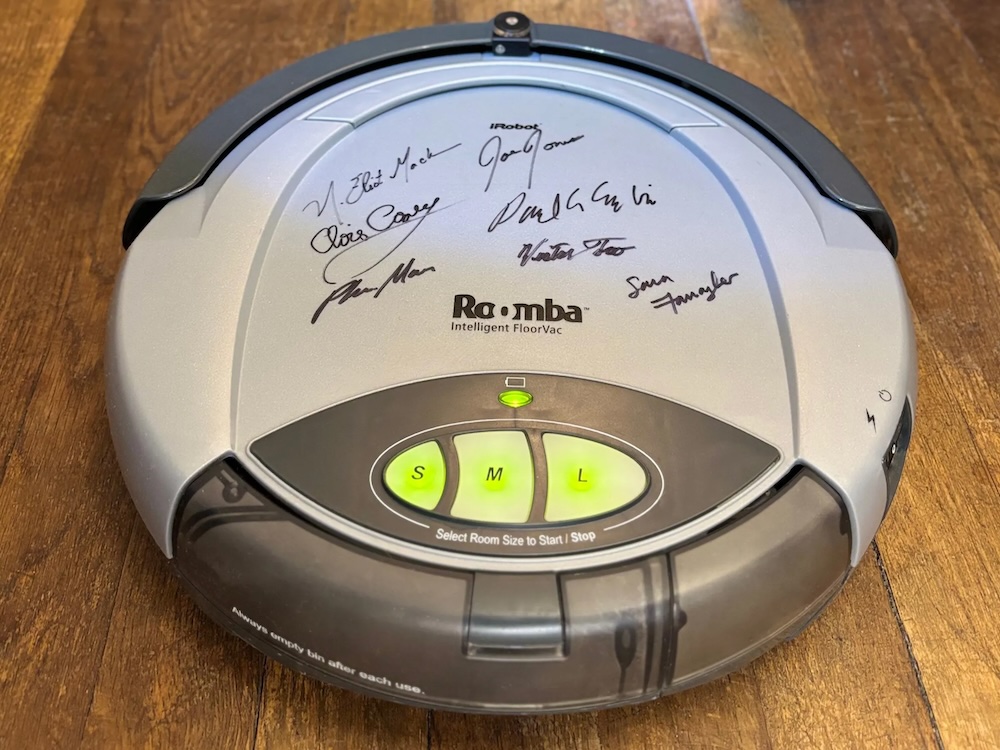
The iRobot development team signed this first-generation Roomba intelligent floorvac. | Credit: Joe Jones
This year, iRobot has been on a bit of a downward spiral. Its revenue continued to drop, and in November, iRobot reported to the U.S. Securities and Exchange Commission that it had failed to find another buyer and had “no sources upon which it can draw for additional capital.”
At that time, Santrum, a subsidiary of Shenzhen Picea Robotics Co., iRobot’s primary contract manufacturer, took on the company’s debt. Combined with its outstanding bills to the contract manufacturer, this debt totaled more than $350 million.
Now, iRobot has entered into a restructuring support agreement with its creditor Santrum Hong Kong Co. and Picea Robotics. The Chinese companies plan to acquire the robotic vacuum cleaner maker through a court-supervised Chapter 11 bankruptcy process.
iRobot said it and some of its affiliates plan to begin a pre-packaged Chapter 11 process in the District of Delaware Court by February 2026. The company said the proceedings will enable it to continue app functionality, customer programs, global partners, supply chain relationships, and product support.
Read how leaders in the robotics industry have reacted to the company’s bankruptcy.