A pioneer in the cobot industry speaks

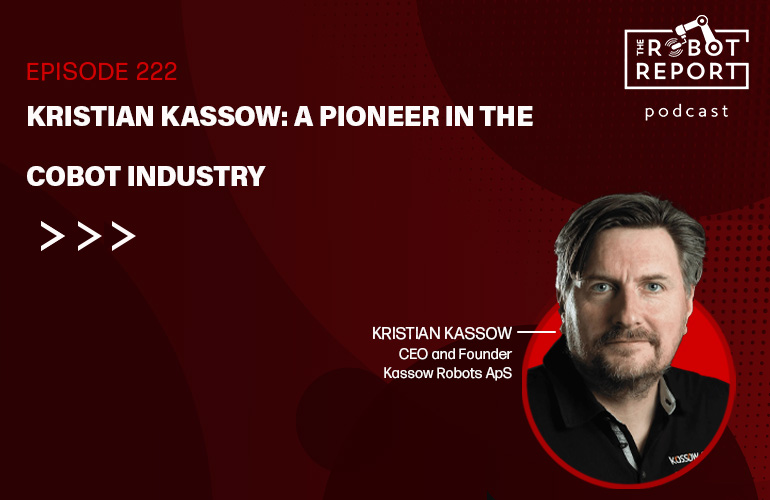
In Episode 222 of The Robot Report Podcast, hosts Steve Crowe and Mike Oitzman recap the major robotics news of the week. Our guest this week is Kristian Kassow, founder and CEO of Kassow Robots.
In the ever-evolving world of robotics, he stands out as a pioneer. As the co-founder of Universal Robots and the managing director of Kassow Robots, Kristian has been at the forefront of developing collaborative robots, also known as cobots, which are transforming industries worldwide. In a recent conversation, he shared his journey and insights into the future of robotics.
Kristian’s journey began with a vision to create lightweight, easy-to-use robot arms. This vision led to the founding of Universal Robots, where he played a crucial role in developing the first collaborative robots. Today, at Kassow Robots, Kristian continues to innovate, focusing on seven-axis cobots that offer enhanced flexibility and precision.
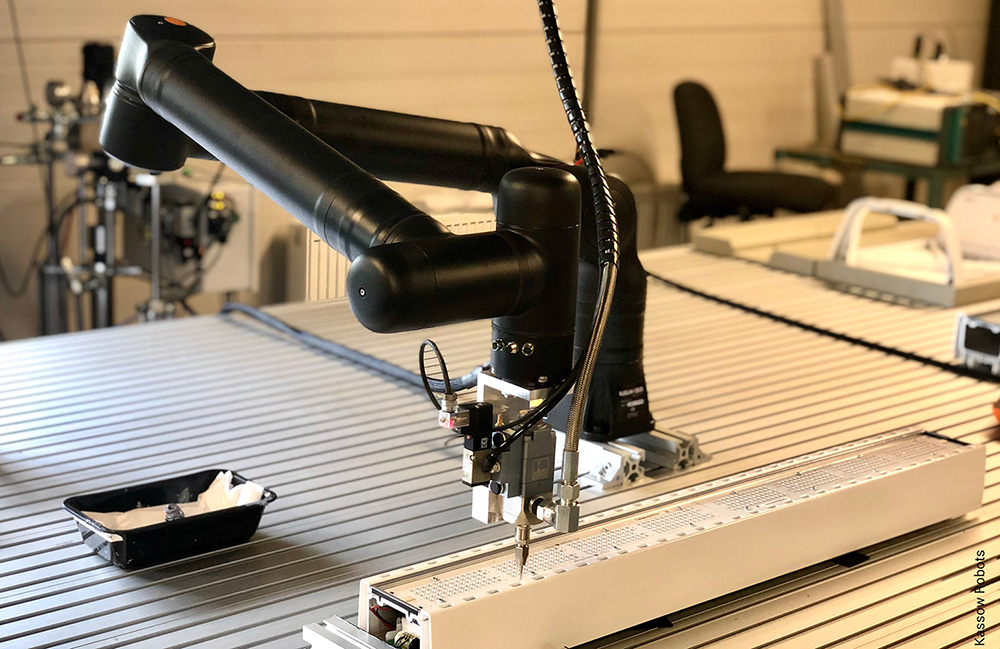
One of the standout features of Kassow Robots is its seven-axis cobots. These robots are designed to overcome the limitations of traditional six-axis arms, particularly in avoiding singularities and working in tight spaces. The additional axis provides greater freedom of movement, making these force- and power-limited robots suitable for complex tasks in various industries.
Show timeline
1:55 – Intro to Memo from Sunday Robotics
10:10 – News of the week
24:56 – Interview with Kristian Kassow, founder and CEO, Kassow Robotics
News of the week
North American robot orders increase in Q3 2025, reports A3
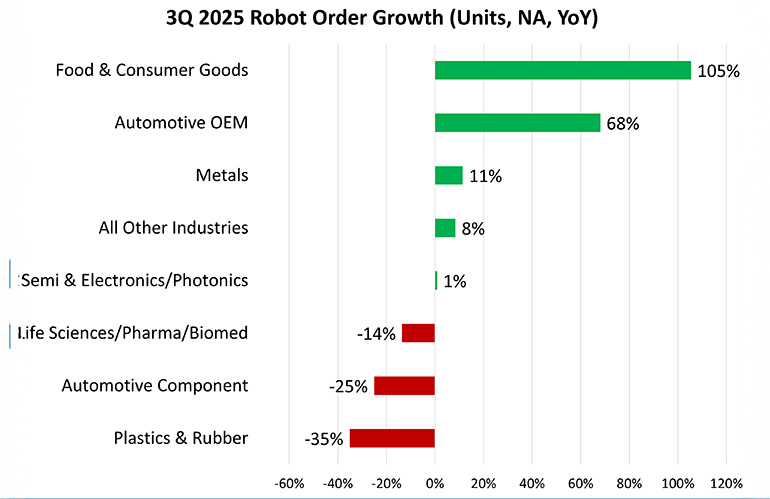
Non-automotive sectors led unit orders as companies made investments to address workforce challenges and reshoring costs, said A3.
After a drop last year and steady sales in the first half of 2025, North American robot orders increased in the Q3 of 2025, according to the Association for Advancing Automation, or A3.
Third-quarter orders totaled 8,806 robots valued at $574 million, an 11.6% increase in units, an 11.6% increase in units and a 17.2% rise in revenue compared with the same period in 2024. In the first half of 2025, robot orders had increased by 4.3%, and revenue had risen 7.5% from the same period last year.
A3 noted that key growth sectors in Q3 included food and consumer goods, as well as automotive OEMs. Additional gains came from metals and all other industries, contributing to broad-based improvement across the quarter. By contrast, automotive component orders, as did plastics and rubber, reflecting sector-specific capital slowdowns, said A3.
Zoox offers its first public autonomous rides in San Francisco
Zoox announced that its Zoox Explorers program is live in San Francisco. The company is inviting members of the public off its waitlist to be among the first to get an autonomous ride.
The company‘s Explorers initiative invites people to ride for free and share valuable feedback to help refine the experience before it scales. To join the waitlist, early riders can download the Zoox app from the iOS or Android App Store.
Earlier this year, Zoox launched its service in Las Vegas. It is currently testing its fleet in several other cities, including Seattle, Austin, Miami, Los Angeles, Atlanta, and Washington, D.C.
Waymo is launching driverless robotaxis in 5 more cities
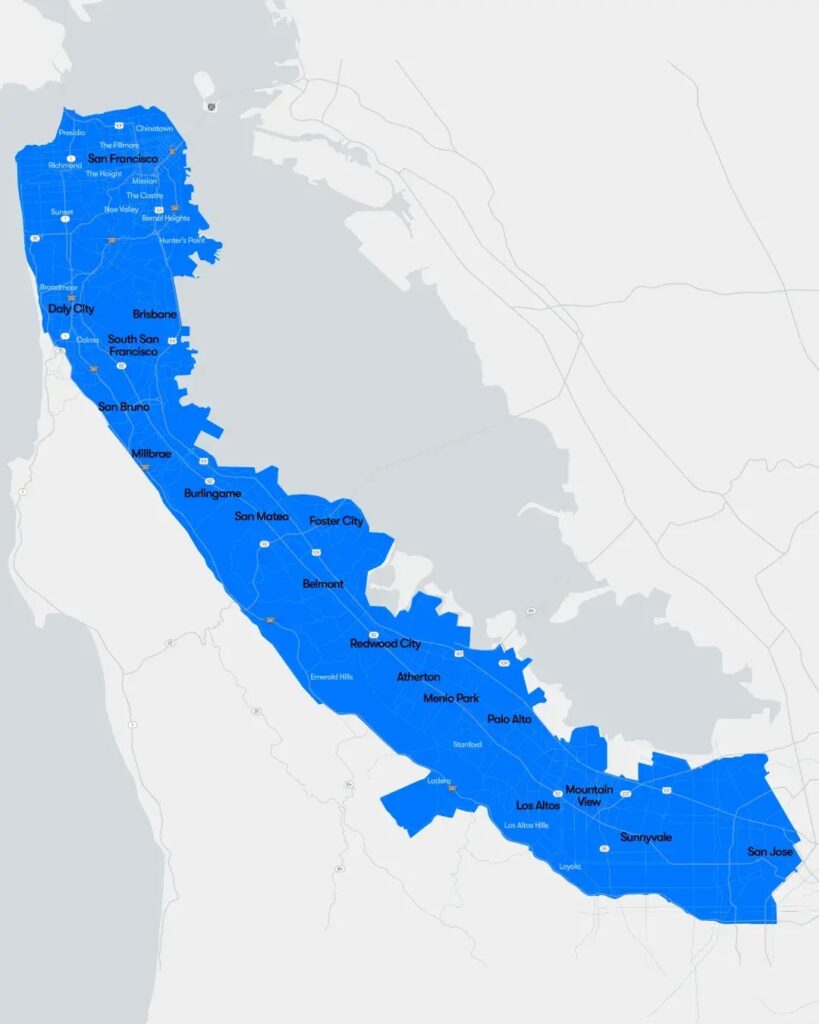
Waymo’s new service map in the San Francisco Bay Area. | Source: Waymo
Waymo is bringing driverless robotaxis to five new cities: Miami, Dallas, Houston, San Antonio, and Orlando. It currently operates autonomous robotaxis in Atlanta, Austin, Los Angeles, Phoenix, and San Francisco.
The company is removing human safety drivers in Miami , and it will begin in the remaining four cities over the coming weeks. To start, the self-driving robotaxis will be available only to Waymo employees in each of these cities. It plans to open services to the public in 2026.
Waymo said it will begin laying the groundwork for a commercial launch of robotaxi services in New Orleans, Minneapolis, and Tampa, Fla. However, the company did not give a timeline for the launches.
Kroger shuts down three Ocado warehouses
Ocado owns a 50% share in the U.K. grocery retail business.
Kroger said it shut down three Ocado micro-fulfillment warehouses because they were not meeting performance and profitability benchmarks, leading to a $2.6 billion charge. The company said it is restructuring its e-commerce business to focus on profitability.
While it is closing these automated facilities, Kroger is expanding its use of in-store fulfillment and partnerships with third-party delivery services like Instacart and DoorDash. The company cited the following challenges as reasons for its shutdown decision:
Lack of profitability: The Ocado-powered fulfillment centers were too expensive to operate and did not generate enough revenue to justify their high fixed costs.
Strategic shift: Kroger is moving away from relying solely on massive, centralized warehouses and shifting towards a more profitable model that uses its existing store network to fulfill online orders and partners with existing rapid delivery companies.
Performance issues: The decision followed a review that found three of the eight automated fulfillment centers did not meet the performance or demand-density thresholds needed to be successful.
Financial impact: The closures are part of a plan to improve digital profitability by about $400 million in 2026 and will result in a one-time impairment charge of $2.6 billion
Meet Memo, the new humanoid robot from Sunday Robotics