Civ Robotics provides CivNav AI navigation for solar construction systems

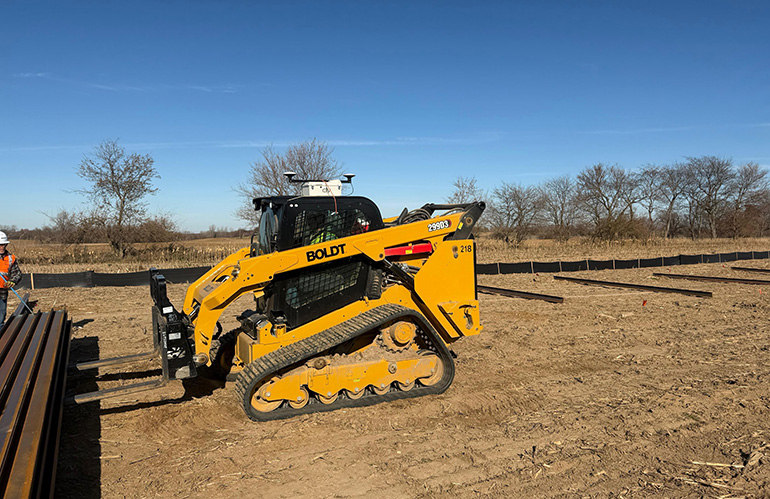
CivNav addresses labor shortfalls in the solar and infrastructure industries. Source: Civ Robotics
Civ Robotics Inc. this week launched CivNav, a material-distribution system for solar construction using artificial intelligence for machine control. CivNav can streamline logistics, efficiently place pallets and drive piles, and accelerate construction with advanced planning and workflow segmentation, said the company.
“We’re seeing really exciting tech entering the industry to solve long-standing inefficiencies,” stated Tom Yeshurun, co-founder and CEO of Civ Robotics.
“The most important element for us is to keep it simple and approachable, so everyone on the worksite can benefit from new developments, no matter their experience level,” he added. “As we continue to build new robotics systems, we ensure innovation and user experience always go hand in hand.”
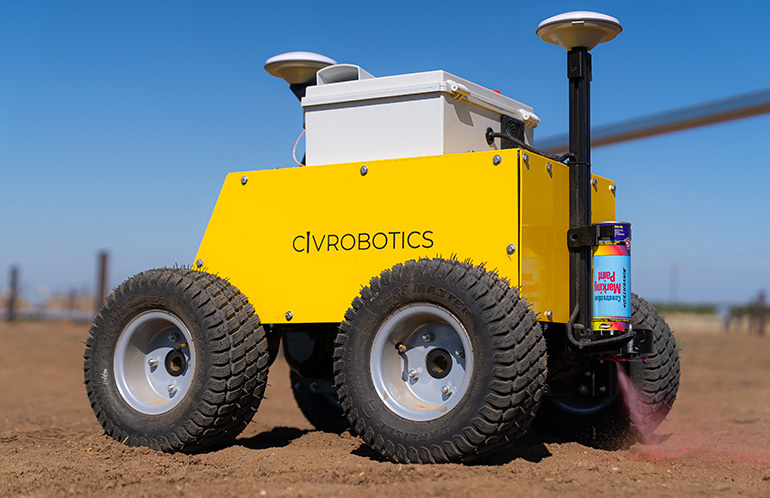
Founded in 2018, Civ Robotics has developed CivDots, uncrewed ground vehicles (UGVs) that mark thousands of coordinates per day for large construction projects. The San Francisco-based company said it is helping to modernize the $3 trillion infrastructure construction industry, including solar farms, roadways, data centers, power plants, and industrial development. It raised $7.5 million in Series A funding in July.
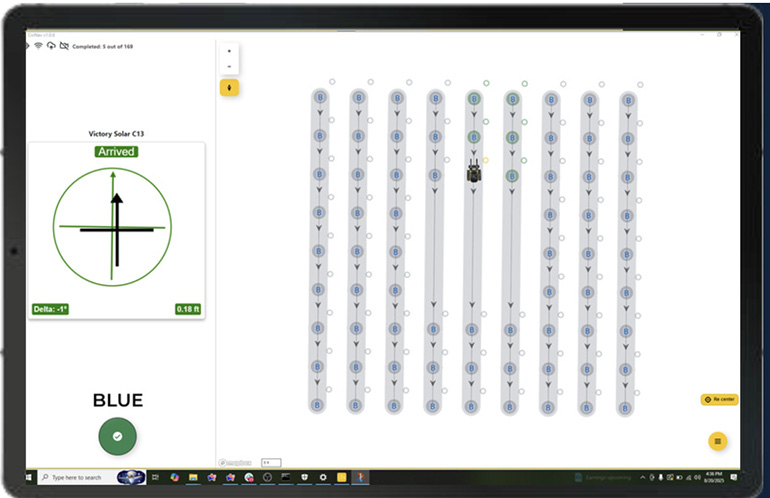
CivNav guides construction workers and vehicles. Source: Civ Robotics
Civ Robotics works to facilitate solar logistics
As demand for solar construction continues to grow, projects are often slowed by complex logistics, requiring constant deliveries that result in sites congested with dozens of trucks, according to Civ Robotics. The construction industry’s current 500,000-worker labor shortage does not help, it noted.
CivNav is designed to be simple and beginner-friendly, the company claimed. To use the system, the operator easily mounts the sensor box on their machine of choice and hops in with the CivNav tablet device in hand.
The system is compatible with any skid steer or tele-handler, and it has already been installed on Bobcat, Takeuchi, Caterpillar, and John Deere machines in the field. Once mounted, CivNav guides the operator where to distribute the piles, photovoltaic modules, and more. The intuitive interface enables precise placement with up to 2-in. accuracy, ensuring every plan is executed precisely, Civ Robotics asserted.
“The input file CivNav uses is the construction site blueprint,” Yeshurun told The Robot Report. “Some of the algorithms run on the device itself, while the analytics and insights are post-processed once the machine gets connectivity.”
When users combine this precise placement with GPS-enabled pile drivers, teams can skip surveying layout altogether.
“As the use of these GPS-enabled pile drivers increases and solar projects grow in scale, the need to cut out steps like construction staking becomes even more vital,” said Civ Robotics. “This is another key step toward automation on the job site, helping to bridge the labor gap.”
CivNav works with CivDot+ robots, AI analytics
Measuring and tracking worksite performance can be difficult, so CivNav’s AI analytics automatically generates daily reports based on real-time data collected during operation. Offering detailed insights into productivity, output, hours, distance traveled, and more, managers can better find bottlenecks and continuously optimize workflows as projects progress, said Civ Robotics.
While CivNav is not directly connected with the company’s CivDot+ robots, they can work in tandem, said Yeshurun. This provides a complete autonomous system for engineering, procurement, and construction (EPC) companies, with or without GPS on pile drivers.
“Most projects deploy one to two robots; the largest project deployed five in parallel,” he said. “Five sites are currently involved in beta testing.”
“Civ Robotics has helped us to layout over 300,000 point locations on three different projects with CivDots,” said Jason Field, a project executive at BOLDT. “Once they shared with us the development of CivNav, which eliminates the need of physical point layout for pile distribution, we knew we had to try it out. The field team was sold after a week of usage; they asked about using it for other tasks on other machines.”
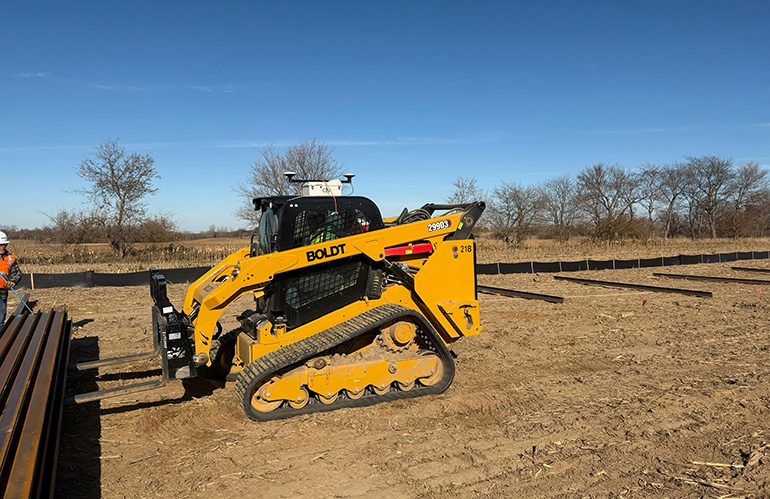
CivNav works with existing solar construction equipment. Source: Civ Robotics