How drone journalism is reshaping reporting

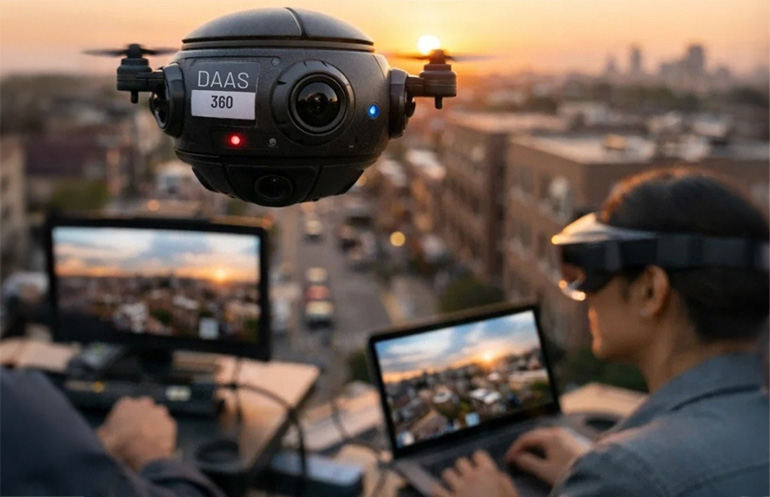
Drones and other autonomous systems can improve reporting accuracy while keeping people out of harm’s way. Source: DroneAsAService
Imagine an aftermath of a flash flood, where reporters are unable to reach the site and provide news.
One August morning in 2023, a rural community experienced a flash flood. Roads were washed out, and houses stood in the middle of fast-moving water. Reporters were unable to access the site and provide footage of the catastrophe.
Not until a drone operator from the station launched a lightweight quadcopter from miles away. Aerial images were streamed on the national news and social platforms, aired within minutes. The drone’s high-angle camera providing real-time footage.
This case is an example of how drones can help journalists, first responders, and the public see what’s going on from otherwise difficult-to-reach angles.

Robotics is changing how news is covered
The history of journalism demonstrates how robotics other technologies have continually transformed storytelling. Starting from reporters clicking on typewriters, sending film to labs for developing, and finally reaching today’s instant and digital newsrooms.
For decades, reporters used notebooks, heavy cameras, and expensive helicopter rides. Drones, or uncrewed aerial vehicles (UAVs), were introduced this century to provide coverage from new perspectives. The very first examples of drone journalism were subtle, capturing stories and events from above with still aerial images.
However, drones’ real potential for journalism became recognizable during the significant world events, where they provided a safe and cheap alternative to helicopters.
An early example of this was the events following the 2011 earthquake and tsunami in Japan. Drones, even the basic ones, were the only ones that could deliver initial damage assessments at the Fukushima nuclear power facility. It helped reporters and aid organizations assess the severity of the disaster, minimizing the risk of entering dangerous sites.
The technology demonstrated that it could expand the horizons for investigative reporting. It also offered to improve safety for journalists and provide the public with more timely information.
Modern journalism is entering a new era where drones and other forms of robotics play a part. Reporting was once limited by geography, physical risk, and time. Now, technology helps deliver the news with speed, precision, and a new perspective.
This fast transformation projected a growing market for the industry of aerial robotics, which analyst firms project could surpass $28 billion by 2030. The main reason for this is the increasing need for real-time processing, mapping, and aerial media coverage.
How drones are transforming newsrooms
The adoption of drones in journalism has opened exciting new possibilities. Newsrooms are increasingly adopting drone as a service (DaaS) solutions, allowing them to deploy drones quickly for real-time coverage without in-house operators or expensive hardware.
Drones promise benefits for journalism:
Drone advantages: Drones can go to places where humans cannot. They can cover areas that are flooded, the borders of the fires, and the places polluted with chemicals.
Continuous event follow-up and streaming: In the case of protests, marathons, or critical political rallies, a drone can capture an uninterrupted and smooth overhead view—something a fixed camera or a ground crew couldn’t provide.
High-definition video makes stories more compelling: It makes storytelling more impactful and engaging with a bird’s-eye view and high-definition shots, extending the scale and scope, changing a flat event into a vivid three-dimensional narrative.
Lower expenses and less time consumption: The expense of deploying a drone is a fraction of chartering a helicopter for aerial media coverage. While also saving time by its ability to deploy in no time, making it efficient for news organizations.
How drones help cover wildfires
A regional broadcaster in Australia deployed drones during the 2017-2018 wildfire season. They helped map fire lines, find evacuation routes, and assist in live on-air analysis. The aerial images were not just compelling; they were a primary source of information.
Later, the producers remarked that the drone footage decreased the risk to the personnel in the field. While also making it possible to provide uninterrupted coverage even at times when the helicopters were unable to fly due to the smoke.
Advantages and challenges of drone journalism
Advantages
Quicker entry to the most inaccessible places
Safer reporters
High-quality images that provide more understanding to the audience
More variety in the way of storytelling
Disadvantages
Violation of privacy when flying over inhabited areas
Difficulties in getting permission that are different in each country
There is a need for newsroom personnel to learn how to fly drones
The possibility of misuse or misunderstanding if the video is without context
The benefits of using drones are obvious; they accelerate, secure, and enrich the reporting process with visuals. Nevertheless, the drawbacks—especially the difficult and constantly evolving regulations—require responsible, ethical use of drones.
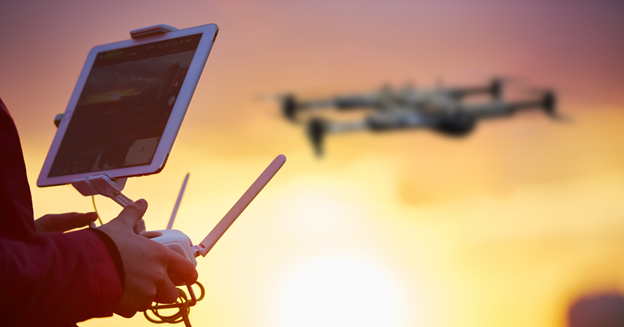
Drones can help collect observations in real time from challenging locations. Source: DroneAsAService.
Automation and smart reporting
The revolution in newsgathering is not only about flying but also the follow-up work. The use of drones is becoming more and more common in conjunction with highly advanced software that supports intelligent reporting:
Automated flight paths: Missions that have been pre-programmed provide a solid basis for consistent, repeatable footage, which can be compared in reporting. This footage includes the checking of damage during and after a storm.
Automated footage processing (analytics): Machine learning can help review footage far more quickly than humans can alone. For example, it can scan aerial drone footage for specific objects, count the number of people, point out environmental changes, or map out damaged areas.
Real-time data synthesis: Drones are capable of collecting visual and environmental data such as thermal imaging or air quality at the same time. That data is then instantly incorporated into a central platform to give context to the human journalist.
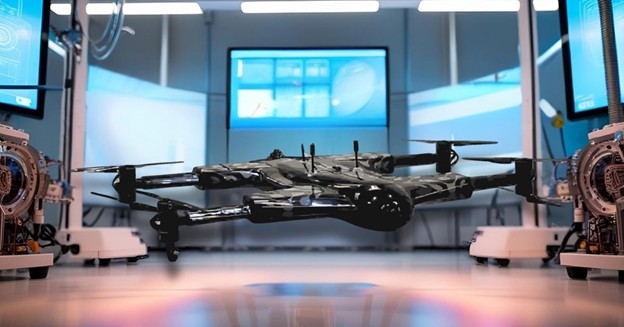
Automated systems can help reporters identify newsworthy data. Source: DroneAsAService.
Aerial journalism incorporates real-time event monitoring
A European news team used aerial journalism techniques with drones in 2022 to monitor crowd-flow patterns at large urban protests. The drones were operating at safe heights and were controlled by real-time data.
Reporters on the scene used the reported data to get the police’s perspective, discredit rumors, and accurately report on the size of the crowd. This example showcases how drone-enabled intelligent reporting assists human editorial decision-making.
However, the role of journalists remains vital in spite of the rising technological innovations. Information is collected by automation, and it is the humans who give meaning to it.
Challenges and considerations
The adoption of drone technology in journalism raises an array of ethical, legal, and practical issues that the industry needs to handle.
Privacy and data protection: Drones that can take high-resolution pictures of people or private properties from large distances. News organizations have to implement strict rules about how to store and use sensitive videos, without violating public rights.
Regulatory compliance across regions: Drones have to operate in a very controlled airspace; these controls vary among countries, as well as among cities in the same region. To ensure that drone operations are legal and safe, journalists must comply with local aviation authorities’ regulations.
Balancing automation with human judgment: While the use of advanced technology in reporting increases productivity, there is also a danger of becoming too dependent on it. The criteria for the news to be printed must not only rely on the information highlighted by the algorithm. The human aspect—the quest to find the truth, taking into consideration the local community and the editorial input—should always come first.
The debate regarding the pros and cons of the usage of drones in news gathering reflects this conflict. Drone capabilities are offset by the need for a significant investment in training, certification, and compliance infrastructure. Technology can be empowering, but it also requires commitment to the new standards for operational ethics and legal scrutiny.
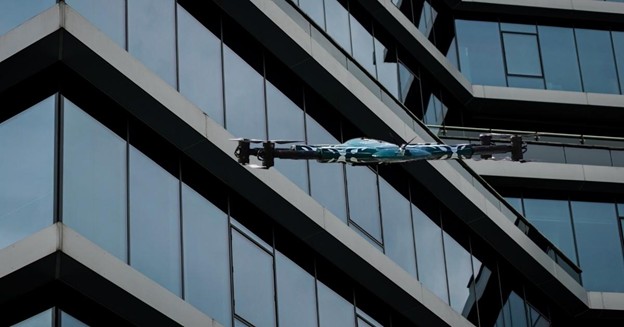
Drone journalism still requires human decision making. Source: DroneAsAService
Technology to continue shaping the future of news media
The present-day applications of drone technology in media are just a glimpse of the innovations about to come.
Robotics to be integrated into reporting workflows
Drones will not only be used, but they will also become essential factors in the new digital asset management system of the newsroom. The footage will be automatically tagged, geo-located, and indexed, which will facilitate instant search and retrieval.
Aerial data leads to new analytical methods
Drones can use hyperspectral sensors and lidar to do non-visual inspections for investigative journalism. For example, they could measure the amount of pollutant levels or map ground changes, uncovering illegal dumping or new construction.
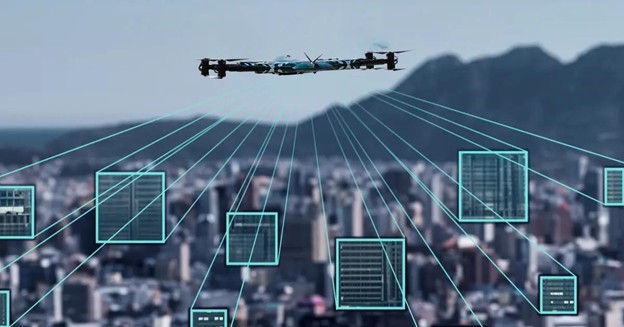
Drones can collect multimodal data for better journalistic analysis. Source: DroneAsAService
Drones boost hyperlocal coverage, immersive storytelling
Quiet and small drones could be used for covering neighborhood-level stories. The drone’s ability to capture 360 degrees around structures and objects will feed directly into virtual reality (VR) and augmented reality (AR) platforms, providing an immersive experience to audiences.
Traditional cameras will remain reliable and an easy way to observe events, but technological developments will make it possible to do so in a more in-depth, timely, and innovative manner.
Drones and robots promise a new era for journalism
Drones and robotics have opened a new era in journalism—an era characterized by improved efficiency, increased safety, and better storytelling.
Drones help journalists in many ways, from covering natural disasters to helping with investigative analysis. They can get into hard-to-reach locations, offer real-time tracking, and provide attractive drone media coverage. All of which give the newsrooms tools that are as good as and sometimes even better than traditional methods.
Nevertheless, the core of journalism remains unchanged. Technology does broaden the view, but it is still human judgment, ethics, and insight that are the main factors. The more that robotic and aerial systems are incorporated into the reporting workflow, the more the stories will be informed, and the more vivid the telling will be.
 About the author
Dania Akram is a contributor at DroneAsAService, covering commercial drone technology, robotics, and emerging UAV applications across media, infrastructure, and industrial operations. Her work focuses on how aerial robotics and automation are transforming real-world workflows through data-driven insights.