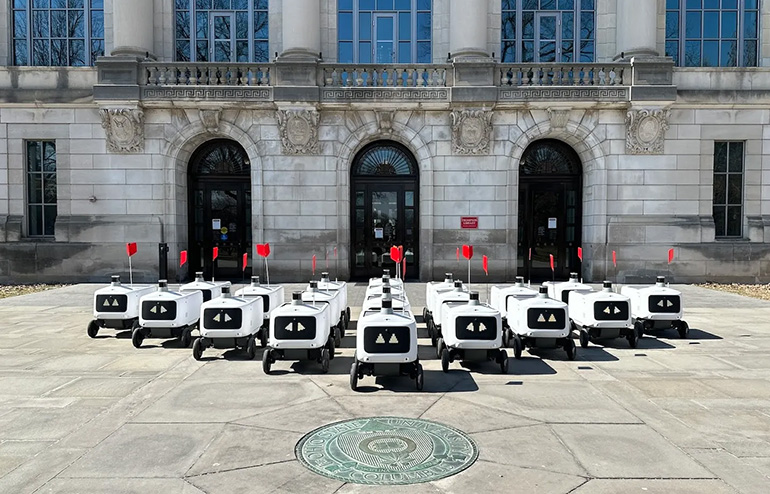
Serve Robotics has deployed 2,000+ delivery robots across the U.S.

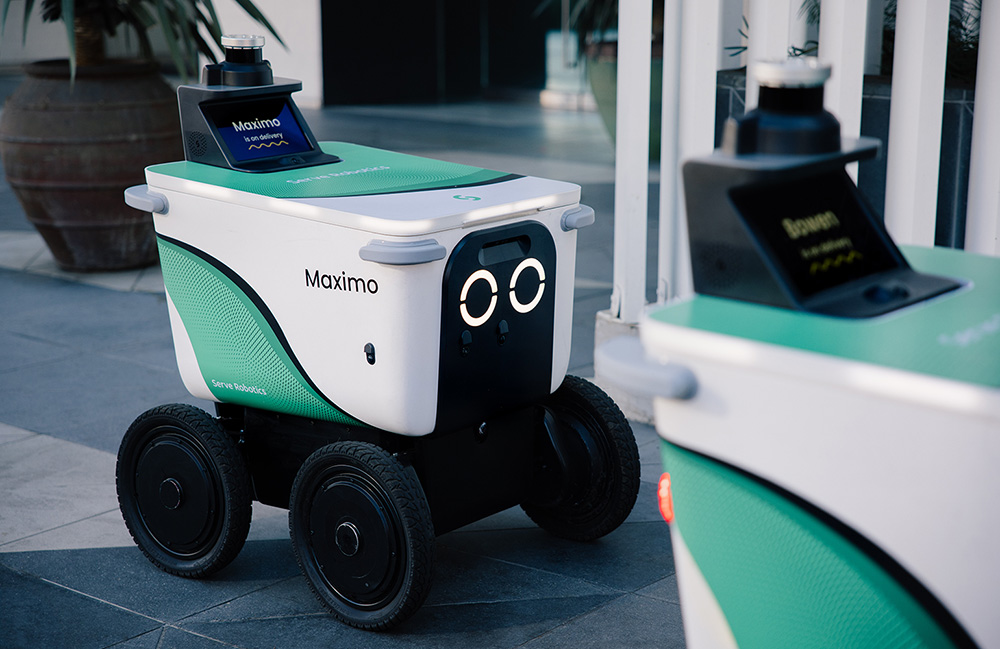
Each Serve Robotics delivery robot can hold up to four large pizzas plus drinks and sides in an insulated compartment. | Source: Serve Robotics
Serve Robotics Inc., last week said it has deployed more than 2,000 sidewalk delivery robots in the U.S. The milestone was part of the company’s 2025 goals.
“This milestone is a testament to the strength of our technology and our ability to scale quickly, efficiently, and safely,” said Ali Kashani, co-founder and CEO of Serve Robotics. “The difference between delivering value versus hype in AI comes down to real-world application. Crossing 2,000 robots enables millions of deliveries to customers and makes delivery more accessible, affordable, and environmentally friendly.”
Since the start of the year, Serve Robotics has expanded its fleet twentyfold. It is deploying its robots in key U.S. markets, including Los Angeles, Atlanta, Dallas-Fort Worth, Miami, Chicago, and Fort Lauderdale, Fla. The company plans to launch additional cities in early 2026.
Serve said partnerships with national and local restaurant brands, retailers, and delivery platforms like Uber Eats and DoorDash have propelled its growth.
Spun off from Uber in 2021, Serve Robotics said it has completed more than 100,000 deliveries for enterprise partners such as 7-Eleven. The Redwood City, Calif.-based company in October announced a common stock sale that could bring in $100 million. Serve plans to use the proceeds for general corporate purposes.
In 2025 alone, Serve expanded service zones in its existing markets, launched in 110 high-density neighborhoods across the U.S., and introduced its Gen 3 robots to support higher-volume operations. Just last week, Serve launched its robotic delivery service in Alexandria, Va.
Serve Robotics is interested in expanding sidewalk use cases
Serve Robotics’ fleet is designed to operate with SAE Level 4 autonomy in complex urban environments. It said its robots safely navigate sidewalks, intersections, and other infrastructure, achieving a 99.8% completion rate. Each electric robot produces zero tailpipe emissions.
“As we continue to expand our fleet size, we are also expanding use cases for our technology,” said Kashani. “The market opportunity for autonomous and electric sidewalk robot delivery is huge and right now, we’re only seeing the tip of the iceberg.”
“Groceries, convenience, small parcels, and return logistics are all a natural fit. Anywhere you find frequent, short-distance deliveries, autonomous technology can create real value,” he added. “Over the next five years, we expect Serve robots to become a ubiquitous part of local logistics, powering a wide range of delivery types as cities rethink how goods move.”
Uber and DoorDash place multiple bets on automation
Uber and DoorDash are both taking a multipronged approach to deploying delivery autonomy. Both companies have multi-year agreements with Serve Robotics.
In addition to its work with Serve, DoorDash also works with Coco Robotics for sidewalk deliveries and with Wing for drone deliveries. The company has also developed its own autonomous delivery robot, Dot. The company said it built Dot to travel on bike lanes, roads, sidewalks, and driveways to perform local deliveries.
DoorDash also has a partnership with autonomous vehicle developer Waymo. The company will use Waymo AVs for grocery runs, meal orders, and more in Metro Phoenix.
Uber Eats is also working with Coco Robotics on sidewalk deliveries in Los Angeles. The company also works with Nuro in Mountain View, California, and Houston, Texas.