Teradar emerges from stealth with terahertz vision sensor, Series B funding

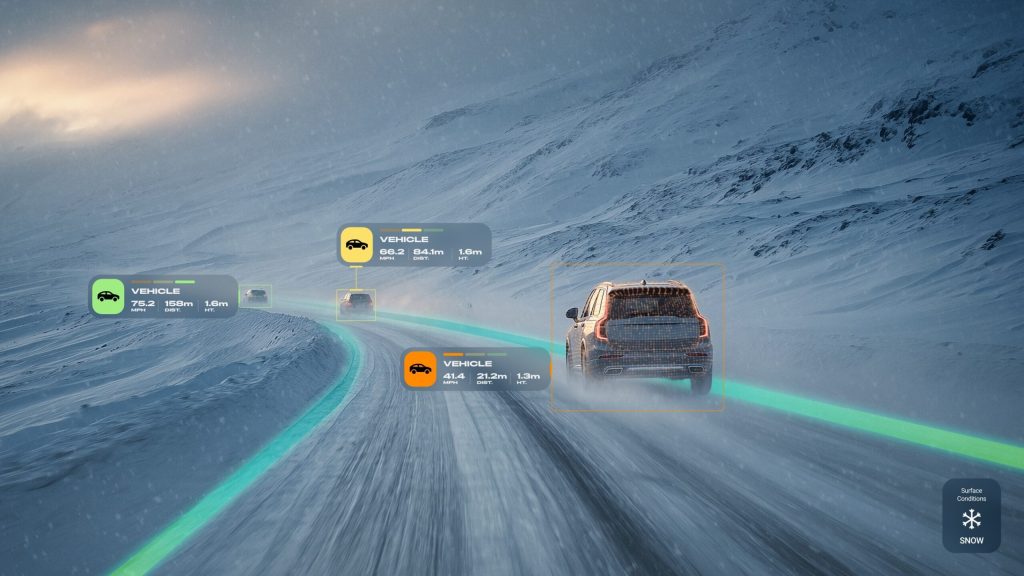
Teradar says its terahertz sensing is better than cameras or lidar in conditions like snow. Source: Teradar
Teradar last week emerged from stealth mode with a commercial sensor that it claimed is the first one capable of perceiving in the terahertz ban of the electromagnetic spectrum. The Boston-based company asserted that its chip technology provides up to 20 times the resolution of current automotive radar.
“Teradar has made terahertz vision a reality by bringing unprecedented resolution and awareness at long range in any weather,” stated Matt Carey, co-founder and CEO of Teradar. “This breakthrough provides vehicles the perception needed to anticipate danger, avoid accidents, and, ultimately, save lives.”
“Ultimately, our goal is to eliminate automotive accidents altogether through dramatically better perception, and this vision can only be achieved with robust, high-performance sensors that can be easily integrated and scaled to support every type of vehicle,” he added.

Teradar raises $150M for perception tech
Teradar said its founders have more than 20 years of experience from MIT and Stanford, spanning automotive engineering, advanced chip design, electromagnetics, photonics, and systems engineering. The company said its solid-state chip technology delivers high-resolution imaging in any weather or lighting condition.
It also announced that it has completed a Series B round totaling $150 million led by VXI Capital with participation from IBEX Investors, Capricorn Investment Group, The Engine Ventures (MIT), and Lockheed Martin Ventures.
“They almost didn’t believe it until they got to play with it,” Carey told TechCrunch. “I’ve never raised money without, like, spending a lot of time in a demo of people trying to break it.”
Teradar said its sensor technology “unlocks safer, smarter vehicles and opens the door to transformative applications in mobility, defense, and beyond.”
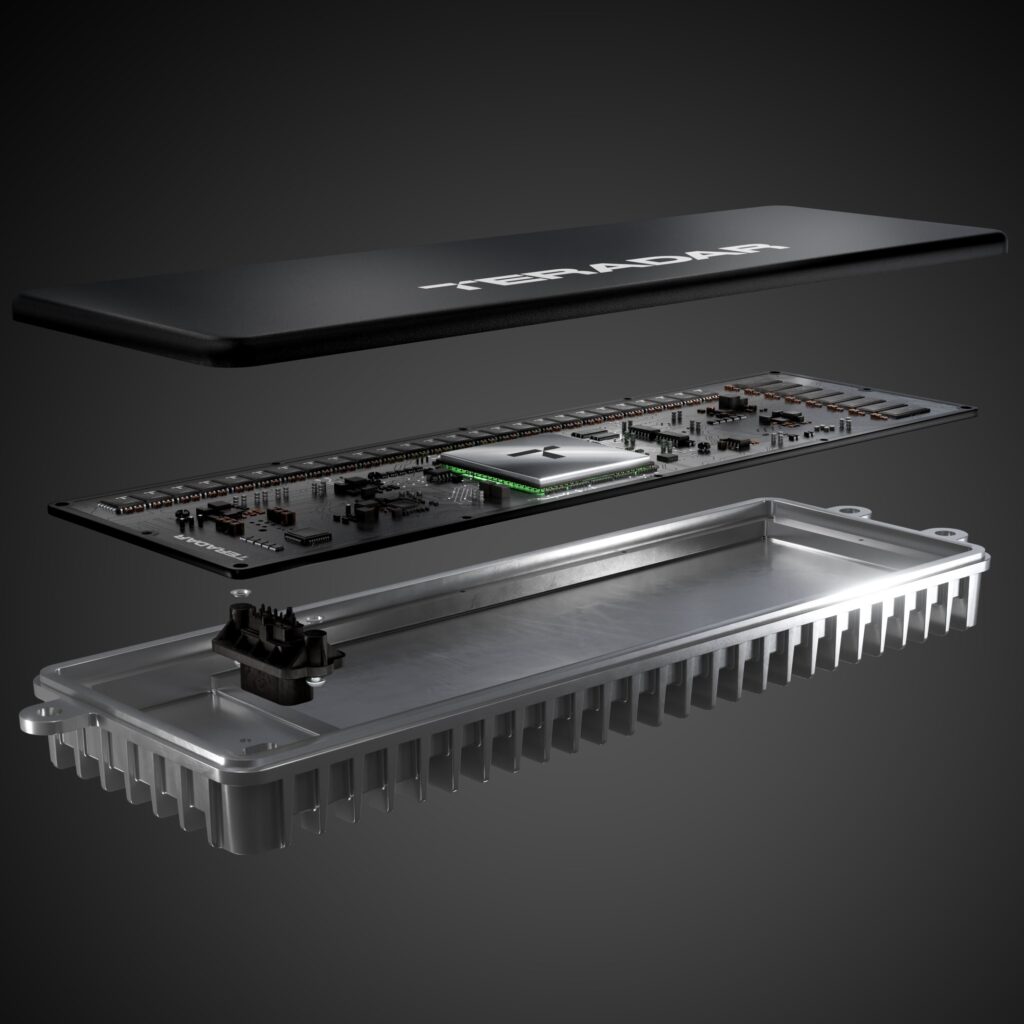
Teradar claims its solid-state chip architecture can be tailored to meet the range and resolution requirements of any ADAS or autonomous driving systems. Source: Teradar
Terahertz sensing promises higher resolution, safety
Self-driving vehicle developers have debated the feasibility and safety of camera-only perception systems for years. Lidar and radar are more expensive, and as fleets increase in levels of autonomy, they have shown their limits, according to Teradar.
The company said its proprietary Modular Terahertz Engine (MTE) is a solid-state chip architecture that can be customized to meet the range and resolution requirements of any SAE Level 1 and 2 advanced driver-assist system (ADAS) or Level 3 to 5 autonomous driving system. The MTE consists of a series of proprietary chips that can safely transmit, receive, and process terahertz waves, it said.
“Terahertz sensors represent a transformative leap for automotive perception,” said Tom Lee, a professor of electrical engineering at Stanford University. “Their ability to deliver exceptional resolution in all weather conditions and at long range enables intelligent vehicles to detect hazards with unprecedented accuracy.”
“This technology brings reliable, real-time environmental awareness to autonomous systems, promising dramatically safer roads and redefining what’s possible for advanced driver assistance and fully autonomous driving worldwide,” he noted.
Teradar said the improved perception and accident avoidance derived from terahertz waves could ultimately prevent more than 150,000 fatal accidents annually worldwide.
The company added that it is working with five of the leading automotive OEMs in the U.S. and Europe, as well as three Tier 1 suppliers. Teradar said it expects to win a vehicle production program by 2028.