U.S. backs Zipline with $150M for drone delivery in Africa

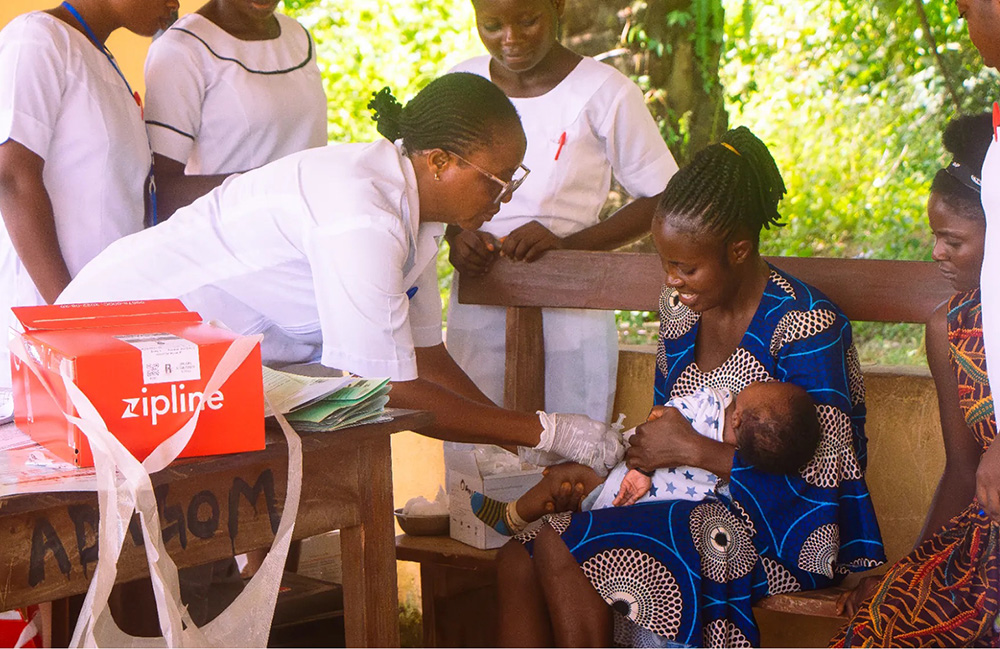
Zipline operates on four continents and completes a delivery every 30 seconds. | Source: Zipline
Zipline last week announced a partnership with the U.S. Department of State to expand its drone delivery service across Africa. Under a new pay-for-performance model, the State Department is providing Zipline with up to $150 million to expand its infrastructure, enabling African governments to provide delivery of essential medical supplies to hospitals and health facilities.
Zipline said this could triple the number of hospitals and health facilities it serves from 5,000 to 15,000. It could also provide up to 130 million people with instant access to blood and medications.
“We started Zipline to build a logistics system that serves all people equally. Today, the U.S. government is doubling down on our work, and using our AI, robotics, and autonomous logistics system to improve health outcomes,” said Keller Rinaudo Cliffton, CEO and co-founder of Zipline. “For years, presidents and prime ministers have told me they want the best of what America has to offer: innovation, jobs, and 21st-century technology to leapfrog into the future. That has always been America’s unique value proposition, and today, the State Department is making that happen.”
Zipline said African countries will pay up to $400 million in utilization fees. The U.S. government will release funding only when governments sign expansion contracts and commit to paying for ongoing logistics services to ensure long-term sustainability.
The American financing will support Zipline in constructing new hubs. Each of the company’s hubs is staffed entirely by local employees, which creates skilled local jobs. Federal and state ministries of health in Africa have procured and paid for Zipline’s services to achieve health and economic improvements in their countries for almost a decade.
Zipline drones deliver critical healthcare supplies in Africa
Zipline said its infrastructure can deliver better health outcomes by solving the root of many public health challenges in Africa: slow, unreliable, and analog logistics that often leave blood, medications, and supplies out of stock or spoiled. In some places where Zipline operates in Africa, the average time between when a health facility places an order and when it is delivered is 13 days. Zipline said it cut that to under 30 minutes for the facilities it serves in the country.
With Zipline, hospitals, health facilities, and community health workers have on-demand access to a pharmacy from many locations.
“With more than 200 million people, Nigeria faces unique challenges and opportunities in delivering healthcare equitably and efficiently. Existing Zipline operations in three Nigerian states have shown how drone delivery can transform access to healthcare — eliminating stockouts, creating new service points even where there is no health facility, driving growth in facility visits and treatment rates, and improving treatment success and health outcomes,” said Muhammad Ali Pate, minister of health and social welfare of Nigeria.
Since its first delivery in 2016, Zipline’s autonomous logistics system has completed 1.8 million autonomous deliveries with zero safety incidents.